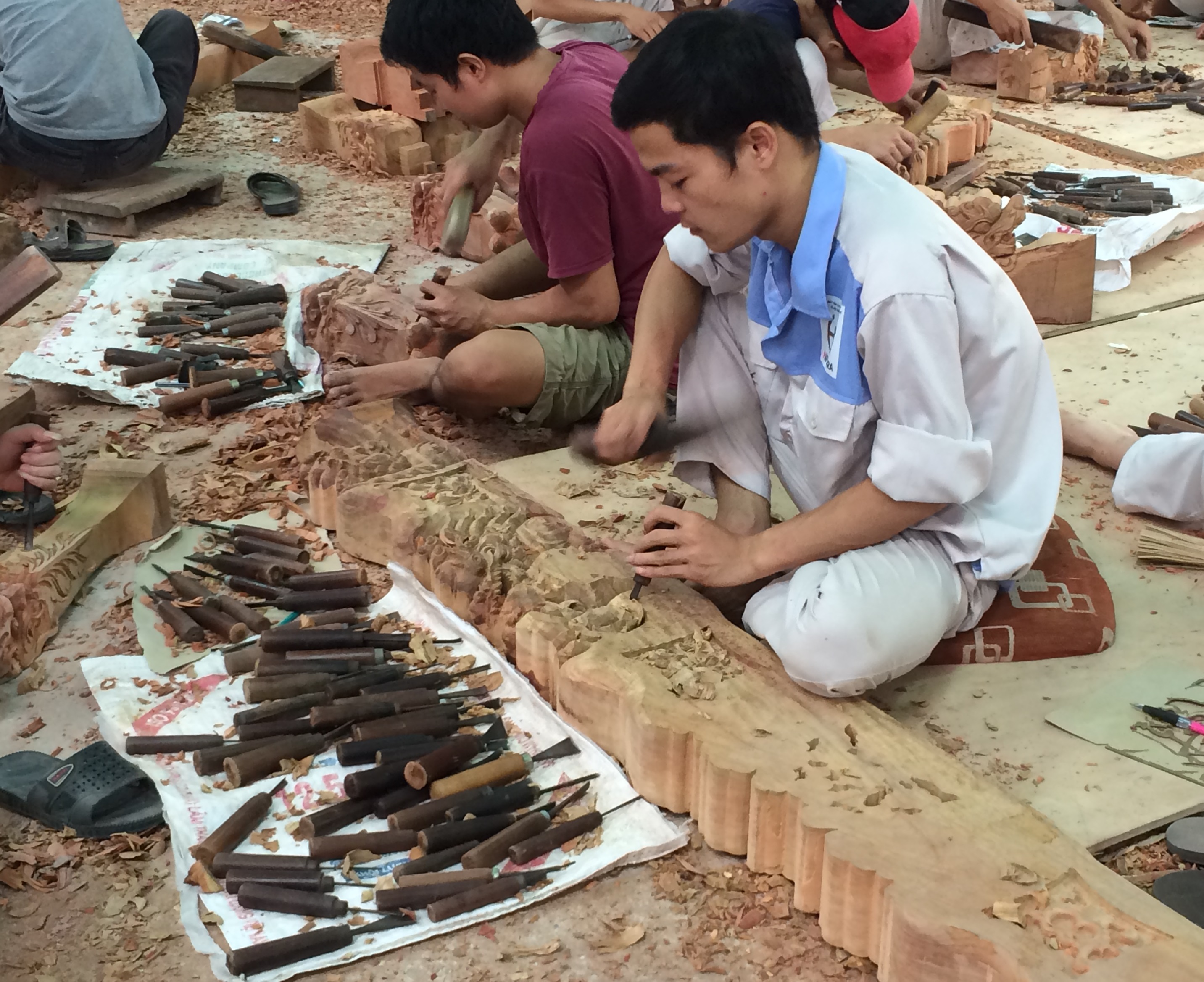
Rubberwood has become one of the i mp or t ant r a w materials for Vietnam’s wood processing industry, especially in exports, but at the same time, the rubber industry is also facing allegations about infringement of sustainable and legal products.
Mr. To Xuan Phuc, Forest Trends expert said that with 264,000 households participating in the timber supply chain, the number of rubber wood from these households will increase in the future. However, determining the origin of wood from these households is extremely complex, as most of the transactions between traders, sawmills with households are oral or handwritten agreements; Very few transactions are certified by state management agencies. In addition, there are no organizations representing for these households. Hence, they are lack of legal product information, and enterprises are not equipped with protective measures when they are intervened commercially or their products are allegedly of an unlawful origin. Sharing this concern, Mr. Hoang Ich Tuan, Purchasing Director of TEKCOM, said that TEKCOM uses an average of 140,000-150,000 m3 / year, of which 65% is sawn timber and planks, the rest are other types of wood for wood processing. For buying domestic rubber wood, the price are often high, sources and volume of purchase are not stable, as well as being in quite a lot of risks. That is why the company does not dare to sign long term contracts with foreign partners, when the legal origins of rubber wood materials can not be guaranteed. He also questioned why China has policies to encourage the purchase of rubber wood? The Chinese government has shut down the forests since the beginning of 2016 and they have a policy of encouraging all Chinese government agencies to repair, if they are source of rubber wood, they will be in priority.

.png)
Mr. Huynh Quang Thanh – General Director of Hiep Long Company sharing in workshop
He suggested the Vietnamese authorities to give similar solutions for the rubber industry development. Mean while, Mr. Huynh Quang Thanh – General Director of Hiep Long Company raised another problem, through the statistics, we discovered next year rubber wood will be shortage of about 3 million m3 , because the large rubber plantation and the small rubber plantation have reduced liquidation, the source will have to be replaced and compensated by other sources. In the next few years, when Vietnam exports wood to the EU market, we have to get a FLEGT license, but at the moment, most of the domestic rubberwood growers or rubber plantation households do not have this license, or the appropriate international certificates. This is also an obstacle that businesses in particular and the rubber industry in general must overcome early. As such, compliance with VPA / FLEGT regulations is a necessary and sufficient condition for businesses operating in this sector to survive and develop. Sustainable wood certification requires the industry to have a specific strategy implemented, and it begins with information gathering and transparency. Information includes land use, labor use, compliance with environmental regulations, tax legislation, fees, etc. In addition, compliance with VPA / FLEGT requirements demands households involved in the chain to make important changes in the organization of their business. To do this, the first and most important thing is to update information, equipping them with knowledge and training skills on issues related to VPA / FLEGT implementation.
GO VIET – 105