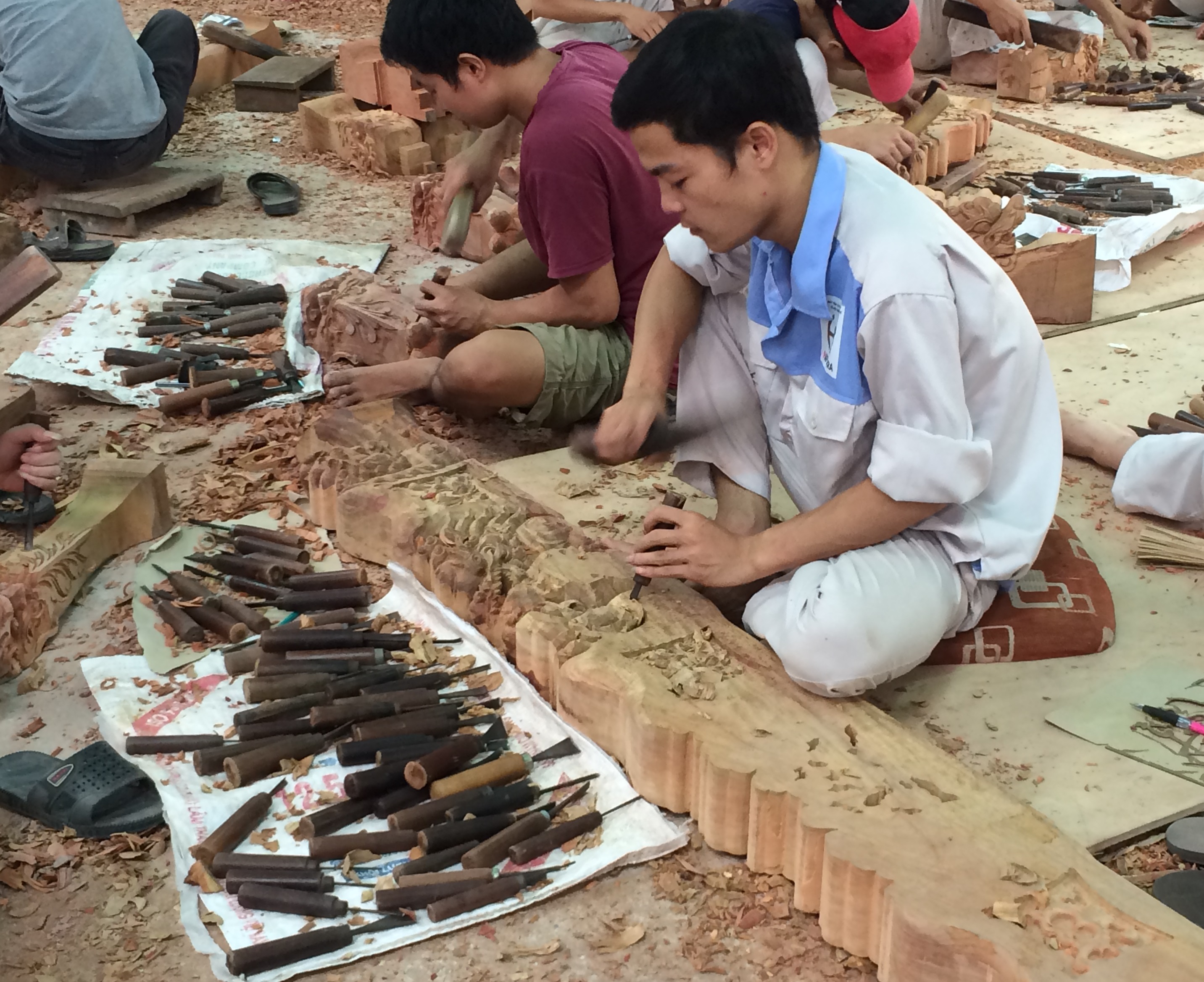
This report describes the current status of households who undertake the timber manufacturing, processing and trading businesses in the wood villages and analyze the legal aspects of timber materials, labor use, environment of manufacturing and trading businesses, and ability of households to comply with the current legal requirements.
The report indicates the transitions of wood village towards sustainable use of timber materials while mentions to the challenges of households in wood villages (e.g. using timbers, hiring labor, environmental protection and fire prevention etc.) those actually are dimensions of the informal economy.
In the context of market integration, the households who undertake the timber manufacturing, processing and trading businesses in wood villages become a part of the supply chain. The households thereby need to comply with the legal requirements related to their businesses.
Finally, the report recommends the assistance measures to help households transforming from informal to formal business model so that the wood-village households will sustainably develop in the future.
We would like to share the full report this here
GoViet
- Ngành công nghiệp gỗ Trung Quốc: Thị trường, chính sách tài nguyên và ý nghĩa đối với Việt Nam
- Gỗ Việt số 65 – Tháng 2+3 năm 2015
- Đồ gỗ ngoài trời: Bắt tín hiệu từ thị trường Mỹ
- Hiệp định lâm nghiệp Châu âu: Mở đường cho các công ty gỗ Việt Nam tiến bước
- Từ Marrakesh đến Bali: Phương thức tiếp cận cảnh quan như thế nào trong thực tế?